UFC 331 has one fight that badly needs doing again.
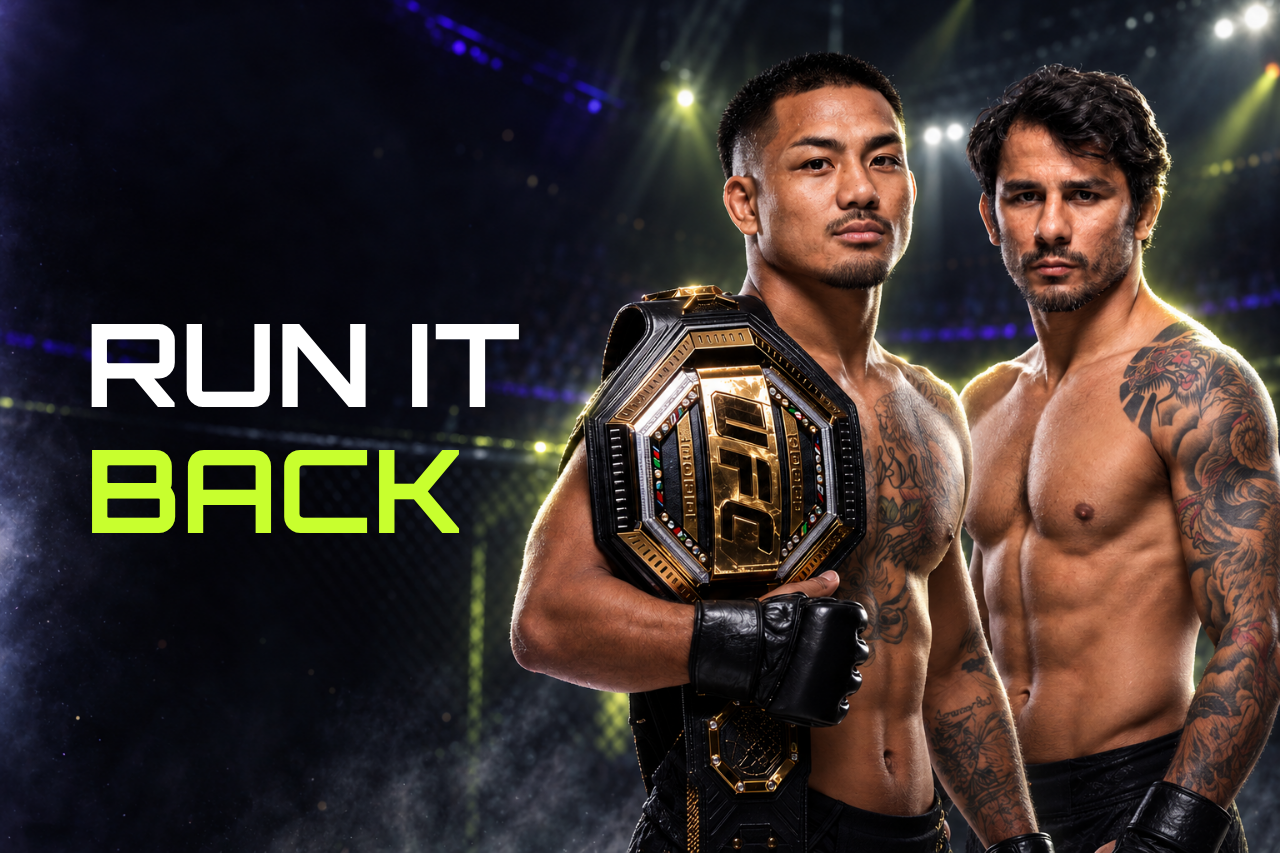
Joshua Van is officially 1-0 against Alexandre Pantoja. He is also the UFC flyweight champion because of it. But when their first meeting ended 26 seconds in after Pantoja suffered a freak elbow injury, there was almost nothing to take from it beyond the result itself.
No real striking battle, no extended scramble, no chance to see whether Van could handle Pantoja’s grappling and no chance to see whether Pantoja could deal with Van’s pace.
Nine months later, we might finally get the fight we were supposed to get the first time.
Van has not stood still in the meantime. He defended the belt against Tatsuro Taira in May and, unlike those 26 seconds with Pantoja, that fight taught us plenty. Taira repeatedly put him on the mat through the opening nine minutes, but Van kept working back up, hurt him badly late in the second and eventually stopped him in the fifth.
It was easily the strongest evidence yet that Van can survive difficult grappling stretches without falling apart mentally or abandoning what he does best.
The rest of Saturday’s main card is pretty good too.
Arman Tsarukyan gets exactly the sort of opponent who can make one bad entry very expensive. Dooho Choi is being given an 80.7% win probability against Patricio Pitbull, which immediately looks like a number worth arguing with. Iwo Baraniewski gets a proper veteran test against Alonzo Menifield, and Gable Steveson continues an MMA career where the expectations are already running well ahead of the amount of actual cage time we have seen.
The model likes one side in all five fights.
I don’t agree with all of them.
And as always, if you just want the picks for all 12 fights, you can find them here: UFC 331 Picks.
Joshua Van vs Alexandre Pantoja

The first fight counts in the record book. For prediction purposes, those 26 seconds are close to useless.
Pantoja entered UFC 323 as roughly a -235 favourite, with Van around +190.
For me, that starting point matters more than a freak injury 26 seconds into a fight.
I am not saying nothing has changed since then. Plenty has.
Van’s win over Taira was excellent. He spent long stretches defending wrestling early, but there was no panic when things were going badly. Taira controlled much of the opening nine minutes before Van finally got back to his feet late in round two, landed a right hand that changed the entire feel of the fight and then began taking over.
By the fifth, Taira was struggling with the pace and Van finished him with strikes.
There is a lot to like about Van in this matchup.
His boxing is faster and cleaner, particularly when he gets to work behind combinations rather than loading up on single shots. The body work has become a serious weapon as well. He stays busy without simply throwing for the sake of it and has already shown that five rounds do not scare him.
Pantoja, though, is not simply an older version of Taira.
Taira did a very good job controlling Van. Pantoja has spent years turning those same kinds of positions into something much more dangerous.
Before the injury he had won eight straight fights and defended the flyweight title four times, with his last two successful defences ending in submissions over Kai Asakura and Kai Kara-France.
Van gave Taira opportunities in the scrambles. He got away with them because he stayed calm, kept moving and eventually returned to his feet.
Against Pantoja, one of those moments could end the fight.
Van can probably afford to lose position against plenty of flyweights. He cannot afford to casually give Pantoja his back while standing up.
Pantoja does not need to control twenty-five minutes to win this fight either. He needs one sequence where Van gets impatient, one transition where the back opens up or one scramble where the neck becomes available.
Van’s job is much more demanding because he probably needs to keep solving the grappling problem again and again while putting enough damage on Pantoja in between.
Age is obviously part of the conversation.
Pantoja is 36 and Van is 24. Flyweight has not historically been kind to older champions, and Van’s pace will only make that question louder if the fight reaches the championship rounds.
But there was no visible collapse in Pantoja’s performances before the injury.
He did not lose the title because somebody finally exposed him. He lost it because his arm gave way 26 seconds into a fight.
That is nowhere near enough for me to suddenly treat Van as the clearly superior fighter.
The TOE Winner Model disagrees. It has Van at 68.9%, which is a huge swing from where the first fight was priced.
Van has absolutely closed the gap since then. The Taira performance deserves to move the needle.
I just have not moved anywhere near as far as the model has.
If Pantoja gets the grappling exchanges he wants, Van is going to be dealing with submission threats rather than simply trying to escape control.
Until somebody shows me Pantoja can no longer do that at this level, I am sticking with the former champion.
TOE MODEL: JOSHUA VAN 68.9%
FRED’S PICK: ALEXANDRE PANTOJA BY SUBMISSION
Arman Tsarukyan vs Mauricio Ruffy

Mauricio Ruffy against anybody willing to stand in front of him is a horrible proposition.
Thirteen of his fourteen wins have come by knockout. He has now stopped Rafael Fiziev and Michael Chandler back-to-back, and the Chandler finish came inside the first round.
Give Ruffy room to work, let him get comfortable changing rhythm and he has enough speed and power to finish almost anyone at lightweight.
Arman Tsarukyan is about as far from a convenient matchup as Ruffy could have been given.
Ruffy’s loss to Benoît Saint Denis remains the obvious piece of film to go back to.
Saint Denis did not spend the fight admiring Ruffy’s striking. He pressured him, forced grappling exchanges and eventually submitted him with a rear-naked choke in the second round.
Since then Ruffy has looked excellent, but Fiziev and Chandler were much happier giving him the type of fight he wanted.
Tsarukyan will not be.
He should spend as little time as possible having a clean kickboxing match here.
Ruffy is dangerous enough that even good striking defence eventually becomes a gamble. Tsarukyan can kick with him, he can box with him and he is athletic enough to avoid being completely overwhelmed at range, but none of that is where his biggest advantage sits.
Pressure Ruffy towards the fence, crowd the stance and make him defend wrestling before he can set his feet properly.
Ruffy’s takedown defence looks excellent on paper. The sample behind it is far less convincing against this specific opponent.
Tsarukyan brings a level of chain wrestling, physical strength and control that Ruffy simply has not faced repeatedly in the UFC.
Ruffy’s best chance comes early.
If he can punish the first few entries, land an uppercut or knee as Tsarukyan changes level and force him to hesitate, the entire fight becomes more uncomfortable.
Tsarukyan cannot afford lazy shots from too far away because Ruffy is far too quick on the counter.
He also does not need them.
Tsarukyan is at his best when the striking and wrestling blur together. Pressure first, make the opponent react, then attack the hips once they are already moving backwards.
If he gets Ruffy against the fence and can start chaining attempts together, Ruffy will spend much more time defending than creating.
Five rounds helps Tsarukyan as well.
Ruffy is explosive and dangerous enough to make the opening ten minutes tense, but constant wrestling is a miserable way to spend twenty-five minutes when your own offence depends so heavily on speed and space.
The model is extremely strong here at 84.7% Tsarukyan.
That number is aggressive given how dangerous Ruffy is, but I understand why it has gone there.
We have already seen Ruffy struggle when somebody refuses to give him a striking match, and Tsarukyan is considerably better equipped than Saint Denis to build an entire fight around that idea.
Ruffy can absolutely make him pay for one bad entry.
I just do not think Tsarukyan gives him enough of them.
TOE MODEL: ARMAN TSARUKYAN 84.7%
FRED’S PICK: ARMAN TSARUKYAN BY DECISION
Patricio Pitbull vs Dooho Choi

An 80.7% Dooho Choi win probability immediately jumps off the model output.
Not because Choi should not be favourite.
He should.
It is the size of the gap that makes me uncomfortable.
Choi has quietly put together a very good run. His stoppage of Daniel Santos in May made it three straight wins, all three by finish, and extended his unbeaten run to four.
Santos started quickly and made him work, but Choi hung around, began finding his range and ended the fight with a brutal body shot late in the second.
He now has fourteen knockouts from seventeen professional wins.
At 35, this is not the young Korean Superboy arriving with ridiculous hype anymore. He has been through enough injuries, layoffs and wars that we have a much clearer picture of who he is.
And he can still crack.
Pitbull has had a much rougher time since arriving in the UFC.
Yair Rodriguez beat him comfortably in his debut, he recovered with a decision over Dan Ige, then Aaron Pico took him apart over three rounds in April.
Pico mixed the striking and takedowns intelligently and left Pitbull struggling to establish much meaningful offence.
Pitbull is 38 now, and there is no avoiding the possibility that some of the decline is simply physical.
But an 80/20 type fight?
That is a lot.
Pitbull has 37 professional wins, twelve knockouts and twelve submissions. He has been fighting at the highest level for years, has championship experience everywhere and has enough tools to stop Choi from treating this like a kickboxing match.
Trying to match Choi shot-for-shot would be a bad idea.
Choi is younger, carries more output and is very happy when opponents let him build combinations.
Pitbull needs to interrupt him. Mix in level changes, clinch when Choi starts getting comfortable, force him to reset and make the pace awkward rather than entertaining.
Choi has never exactly had a problem accepting a firefight.
That is part of why people love watching him, but it also gives Pitbull a way into a matchup where most of the broader advantages now sit with the Korean.
There is enough recent evidence to believe Choi will eventually find him.
Pitbull struggled badly with Pico’s pace and variety, while Choi has started finishing opponents again rather than relying on the judges.
The model likes Choi more than I do.
The pick is still Choi.
TOE MODEL: DOOHO CHOI 80.7%
FRED’S PICK: DOOHO CHOI BY KO/TKO
Alonzo Menifield vs Iwo Baraniewski

Iwo Baraniewski’s professional record barely looks real.
Nine fights. Nine wins. Nine first-round finishes.
Seven by knockout, two by submission, and his longest professional fight has lasted just 3:54.
Since entering the UFC he has stopped Ibo Aslan, Austen Lane and Junior Tafa. He has barely been asked to solve a problem for more than a few minutes.
At some point somebody has to make him uncomfortable.
Alonzo Menifield is a decent candidate.
Menifield is 38, but he is not being wheeled out here after a string of bad performances. He just knocked out Zhang Mingyang in Macau after surviving a properly chaotic opening round, and he owns eleven knockouts of his own.
If both men decide this is a competition to see who can land the first huge right hand, Baraniewski probably has the speed and freshness advantage.
Menifield would be wise to make it a mess.
Baraniewski comes from a judo background but has barely needed to show it in the UFC because everyone keeps disappearing before the fights have had time to develop.
He has not had to manage fatigue, recover after losing a round or solve an opponent after the first plan stops working.
That unknown is far more interesting than another highlight-reel compilation.
What happens if Menifield eats the first big shot and stays there?
What happens if he ties Baraniewski up against the fence, slows the pace and makes him start a second round with some actual work in his arms?
Nobody knows yet.
The model gives Baraniewski 68.6% to win, but the method output is even more aggressive, with KO/TKO at 76.1% if he wins.
Given everything we have seen, the method is difficult to argue against.
Menifield is experienced and dangerous enough to make this the toughest test of Baraniewski’s career, but he is also perfectly willing to exchange power in the pocket.
Baraniewski has spent his entire career punishing exactly that.
TOE MODEL: IWO BARANIEWSKI 68.6%
FRED’S PICK: IWO BARANIEWSKI BY KO/TKO
Gable Steveson vs Sean Sharaf

Trying to put a sensible ceiling on Gable Steveson after four professional MMA fights is almost impossible.
Trying to pretend there is already enough evidence to justify 92.6% confidence is difficult too.
Steveson is 4-0 with four first-round knockouts.
His total professional cage time is only 8:24.
He is an Olympic gold medallist, a two-time NCAA Division I champion and one of the most credentialled wrestlers ever to enter MMA this early in a career.
He barely wrestled in his UFC debut.
Elisha Ellison managed to land on him, Steveson kept coming forward and then overwhelmed him with strikes midway through the first round.
It was not technically perfect, but that is hardly surprising for somebody having his fourth professional fight.
Sean Sharaf is not being brought in to expose every hole in Steveson’s game.
He is 4-2, all four wins have come by first-round knockout and both UFC appearances have ended with him being stopped in round two.
That and Steveson’s physicality make the matchup fairly brutal.
Sharaf does have real power, which at heavyweight means he cannot simply be ignored.
Steveson was hit cleanly enough by Ellison to remind everyone that his MMA striking is still developing. If he starts believing the hype and decides he wants to prove he can stand and bang with everybody, eventually somebody will punish him for it.
There is absolutely no need for that here.
Steveson owns an enormous wrestling advantage.
If Sharaf starts landing, he can change the entire fight in seconds. If the striking is working, keep it there. If it stops working, put him on his back.
What I really want to see from Steveson now is a bit more patience and a few more layers.
Four straight first-round knockouts look great, but at some point the UFC needs to find out what happens when somebody is still standing ten minutes later.
The model sits at 92.6%, the highest winner probability anywhere on the card.
It looks outrageous.
This might actually be one of the easier numbers on the main card to defend.
TOE MODEL: GABLE STEVESON 92.6%
FRED’S PICK: GABLE STEVESON BY KO/TKO
Final Read
There is quite a bit of model confidence on this main card.
Steveson at 92.6%. Tsarukyan at 84.7%. Choi at 80.7%. Even Van sits at 68.9% in a championship rematch against a man who entered their first fight as a heavy favourite.
Some of those numbers hold up pretty well once the fights are pulled apart.
Tsarukyan has exactly the style that has caused Ruffy problems before. Baraniewski’s finishing record is ridiculous and Menifield is unlikely to spend fifteen minutes avoiding exchanges. Steveson has barely started learning MMA and may already possess the biggest underlying advantage on the card.
The main event is where I split from the model.
Van has done more than enough since UFC 323 to make the second fight closer than the first one looked on paper.
What he has not done is erase years of evidence showing how dangerous Pantoja becomes once a fight starts scrambling.
Twenty-six seconds did not prove Van was the better fighter.
Saturday gets another chance.